Medal Of Honour
The Medal of Honor (MoH) is the highest military medal a service member can earn. Created in the wake of the Civil War, the Medal of Honor is awarded to those who risk their lives above and beyond the call of duty in “actual combat” against an armed enemy of the United States. Medal of Honor Recipients are a part of something greater. They collectively embody the values that we as a country strive to uphold—courage, bravery, and the desire and dedication to do what is right in the midst of life’s most difficult circumstances. But they are also unique. They are parents and siblings, colleagues and friends.
- Medal Of Honor Day 2021
- Medal Of Honor Pacific Assault
- Medal Of Honour Allied Assault
- Medal Of Honor Warfighter
- Medal Of Honor Day
- Rank and organization: Private First Class, United States Army, Medical Detachment, 307th Infantry, 77th Infantry Division.
- Place and date: Near Urasoe Mura, Okinawa, Ryukyu Islands, April 29, 1945 – May 21, 1945.
- Entered service at: Lynchburg, Virginia
- Birth: Lynchburg, Virginia
- G.O. No.: 97, October 1, 1945.
The Citation:
The President of the United States of America, in the name of Congress, takes pleasure in presenting the Medal of Honor to Private First Class Desmond Thomas Doss, United States Army, for conspicuous gallantry and intrepidity in action above and beyond the call of duty from April 29 - 21 May 1945, while serving with the Medical Detachment, 307th Infantry Regiment, 77th Infantry Division, in action at Urasoe Mura, Okinawa, Ryukyu Islands.
Private First Class Doss was a company aid man when the 1st Battalion assaulted a jagged escarpment 400 feet high As our troops gained the summit, a heavy concentration of artillery, mortar and machinegun fire crashed into them, inflicting approximately 75 casualties and driving the others back. Private First Class Doss refused to seek cover and remained in the fire-swept area with the many stricken, carrying them one-by-one to the edge of the escarpment and there lowering them on a rope-supported litter down the face of a cliff to friendly hands. On 2 May, he exposed himself to heavy rifle and mortar fire in rescuing a wounded man 200 yards forward of the lines on the same escarpment; and two days later he treated four men who had been cut down while assaulting a strongly defended cave, advancing through a shower of grenades to within eight yards of enemy forces in a cave's mouth, where he dressed his comrades' wounds before making four separate trips under fire to evacuate them to safety. On 5 May, he unhesitatingly braved enemy shelling and small arms fire to assist an artillery officer. He applied bandages, moved his patient to a spot that offered protection from small arms fire and, while artillery and mortar shells fell close by, painstakingly administered plasma. Later that day, when an American was severely wounded by fire from a cave, Private First Class Doss crawled to him where he had fallen 25 feet from the enemy position, rendered aid, and carried him 100 yards to safety while continually exposed to enemy fire. On 21 May, in a night attack on high ground near Shuri, he remained in exposed territory while the rest of his company took cover, fearlessly risking the chance that he would be mistaken for an infiltrating Japanese and giving aid to the injured until he was himself seriously wounded in the legs by the explosion of a grenade. Rather than call another aid man from cover, he cared for his own injuries and waited five hours before litter bearers reached him and started carrying him to cover. The trio was caught in an enemy tank attack and Private First Class Doss, seeing a more critically wounded man nearby, crawled off the litter; and directed the bearers to give their first attention to the other man. Awaiting the litter bearers' return, he was again struck, this time suffering a compound fracture of one arm. With magnificent fortitude he bound a rifle stock to his shattered arm as a splint and then crawled 300 yards over rough terrain to the aid station. Through his outstanding bravery and unflinching determination in the face of desperately dangerous conditions Private First Class Doss saved the lives of many soldiers. His name became a symbol throughout the 77th Infantry Division for outstanding gallantry far above and beyond the call of duty.
General Orders: War Department, General Orders No. 97 (November 1, 1945)

Action Date: April 29 - May 21, 1945
External Links (open in new windows)
Master Listing
A complete list of Congressional Medal of Honor recipients from all eras. This list incorporates additional details regarding the recipient's entry into service, specialties, mission details, and gravesite images.
War on Terror
Congressional Medal of Honor recipients from the War on Terror Era. This list incorporates additional details regarding the recipient's entry into service, specialties, mission details, and gravesite images.
Vietnam War
Congressional Medal of Honor recipients from the Vietnam War. This list incorporates additional details regarding the recipient's entry into service, specialties, mission details, and gravesite images.
Korean War

Congressional Medal of Honor recipients from the Korean War. This list incorporates additional details regarding the recipient's entry into service, specialties, mission details, and gravesite images.
World War II
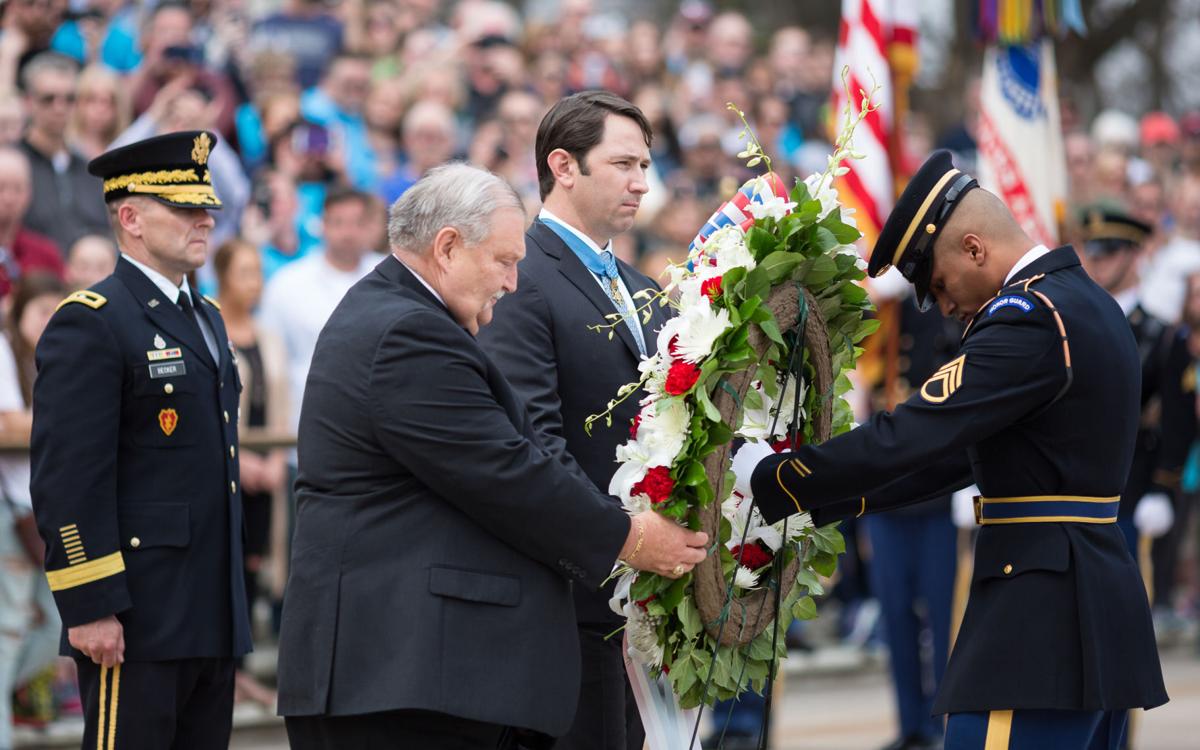
Congressional Medal of Honor recipients from World War II. This list incorporates additional details regarding the recipient's entry into service, specialties, mission details, and gravesite images.
World War I
Congressional Medal of Honor recipients from World War I. This list incorporates additional details regarding the recipient's entry into service, specialties, mission details, and gravesite images.
Civil War
Congressional Medal of Honor recipients from the Civil War. This list incorporates additional details regarding the recipient's entry into service, specialties, mission details, and gravesite images.
Other Conflicts
Congressional Medal of Honor recipients from Other Conflicts, and Peacetimes. This list incorporates additional details regarding the recipient's entry into service, specialties, mission details, and gravesite images.
Medal Of Honor Day 2021
Our Military's first medal was the Badge for Military Merit, established by General George Washington during the American Revolution and presented only three times. During the American Civil War, the Medal of Honor was established and presented nearly 3,000 times before World War I. Other than the now obsolete Certificate of Merit and Marine Corps Brevet Medal, it was the only award available in the U.S. Military, and in the Navy and Marine Corps, it could only be presented to enlisted sailors and Marines.
At the time of the Civil War, the Medal of Honor was the only award available for recognizing a significant act of heroism while serving the United States military. In some cases, it was awarded frivolously. The Civil War ended in 1865. In 1917, a review was made of Medal of Honor awards with the revocation of 911 deemed to have been awarded without proper merit.
At the same time, to recognize deeds of lesser heroism than what was required for the Medal of Honor, as well as to recognize distinguished service and/or achievement that was laudable but not necessarily heroic, a series of 'lesser awards' in descending orders of precedence was established in the Military Pyramid of Honor. For more information see Medals and Awards.
Looking for more? Many visitors find our Medal of Honor Interesting Facts very informative!
Recipients by Branch
Medal Of Honor Pacific Assault
1 - U.S. Coast Guard
5 - Foreign
8 - Civilian
17 - U.S. Air Force
297 - U.S. Marine Corps
746 - U.S. Navy
2,404 - U.S. Army
Medal Of Honour Allied Assault
Recipients by Conflict
Medal Of Honor Warfighter
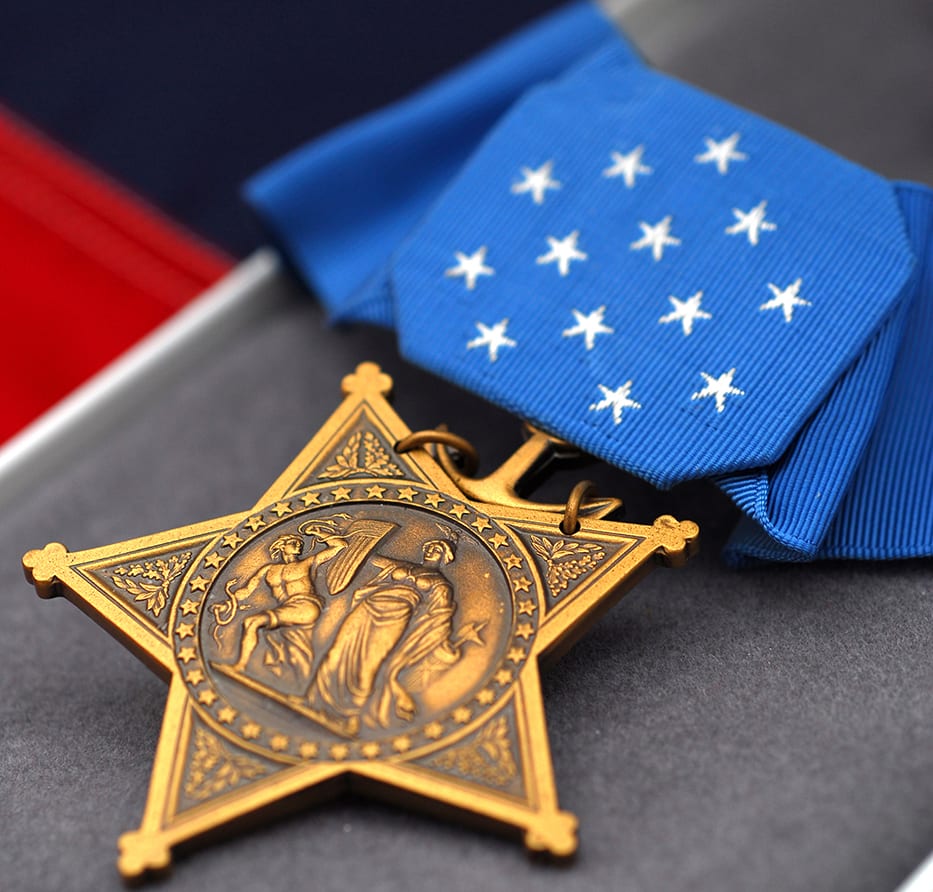
Medal Of Honor Day
19 - Global War on Terror
261 - Vietnam War
146 - Korean War
473- World War II
132 - World War I
1,523 - Civil War
965 - Campaigns, Conflicts and Peace Time